TL;DR
- Start with something short and readable, then move to the main system later.
- A “good” edition is the one you will finish. Clarity and light notes beat prestige.
- Learn two anchors early: Will (plain English) and Representation.
- Pick one translation style and stick with it for a while. Constant switching slows learning.
What makes a Schopenhauer edition “good”
1) Translation style
Don’t chase “the best Schopenhauer translation” as an abstract trophy. Pick the version that lets you read steadily and understand what you just read.
For beginners, a readable modern tone is usually better than a stiff, antique one. The goal is comprehension, not reenactment.
2) Notes and introductions
You want three things.
- A short introduction that tells you what the text is and why it matters.
- Enough notes to explain recurring terms and references.
- Not so many notes that you stop reading the actual text.
3) A realistic first target
In your first week, you are not “mastering Schopenhauer.” You are learning his basic moves.
- Representation is the world as it appears to a knowing subject, structured by how we experience space, time, and causality.
- Will is the drive behind wanting and striving, not willpower.
- His “pessimism” is a diagnosis about desire and satisfaction, not a temperament test. See Pessimism (what it is / isn’t).
If you want a structured ramp, use Start Here: Schopenhauer in 7 Days and then Reading Order (Beginner → Advanced).
Quick recommendations by reader type1) Total beginner
Goal: get the core diagnosis and vocabulary without drowning.
- Start with On the Suffering of the World (overview + best edition).
- Add Essays and Aphorisms (how to read + best selection) for short, high-signal reading.
- Use two anchors as you go: Will (plain English) and Representation.
- Then approach the main work with a map: The World as Will and Representation (overview + how to approach it).
2) Philosophically literate
Goal: move toward the system while keeping your footing.
- Use The World as Will and Representation (overview + how to approach it) as your entry map.
- Ground your reading with Representation and Principle of Sufficient Reason.
- Keep a short-work companion in rotation so the ideas stay concrete: Essays and Aphorisms (how to read + best selection).
3) Here for pessimism and psychology
Goal: understand his model of desire, dissatisfaction, and relief.
- Start with On the Suffering of the World (overview + best edition).
- Pair it with Will (plain English) so “pessimism” stays grounded in a mechanism, not a mood.
- Add Essays and Aphorisms (how to read + best selection) for breadth and bite.
Best Schopenhauer books and editions (comparison table)
This is not a ranking. The “best Schopenhauer books” depend on what you want and what you will actually finish.
| Title | What it is | Best for | Why it matters | If you dislike it, try this instead |
|---|---|---|---|---|
| The World as Will and Representation | The full system | Readers ready for a slower, structured project | Everything else points back to this framework | On the Suffering of the World (overview + best edition) |
| On the Suffering of the World | A concentrated statement of his “pessimistic” diagnosis | Beginners who want a strong entry point | Gives the core argument about desire and suffering without the full architecture | Essays and Aphorisms (how to read + best selection) |
| Essays and Aphorisms | Short pieces across ethics, psychology, and practical life | Busy readers, samplers, cautious beginners | Builds familiarity with his voice and recurring themes in small units | Start Here: Schopenhauer in 7 Days |
| Parerga and Paralipomena (selections) | Later essays and add-ons, often more approachable than the main work | Readers who liked the essays and want more range | Shows him applying ideas to everyday life from multiple angles | Essays and Aphorisms (how to read + best selection) |
| The Two Fundamental Problems of Ethics | His major ethical writings in a more formal shape | Readers primarily interested in moral philosophy | Clarifies why he grounds morality in compassion rather than rules | Compassion & Ethics |
| On the Basis of Morality | A focused argument about moral motivation (often excerpted in collections) | Readers who want ethics without sermons | Makes the “motive matters” idea explicit and sustained | Compassion & Ethics |
| On the Freedom of the Will | A compact treatment of freedom, character, and motive | Readers drawn to psychology and self-knowledge | Explains why choices feel free while still following motives | Free Will (his view) |
| A “starter bundle” (a sequence, not a single title) | Short work + concepts + then the main work | Anyone who wants a reliable path | Prevents quitting by starting with the hardest text too early | Reading Order (Beginner → Advanced) |
Note on translations and editions. There is no single universally “best” Schopenhauer translation for every reader. In practice, the best edition is the one you can read with steady comprehension and minimal friction.
Where to start Schopenhauer in one week
If you want an on-ramp that works for busy people, use this sequence.
- Start Here: Schopenhauer in 7 Days
- On the Suffering of the World (overview + best edition)
- Will (plain English)
- Representation
- Then use Reading Order (Beginner → Advanced) to choose your next step based on your interests.
Avoid these beginner mistakes
- Starting with The World as Will and Representation and trying to “push through” without a map
- Treating pessimism as a personality label instead of an argument about desire and satisfaction
- Confusing Will with willpower or conscious choice
- Chasing translation debates instead of reading one edition consistently
- Skipping the concept pages and hoping the works will teach the vocabulary for you
- Reading him as self-help rather than as a diagnosis of experience
Common confusion
Which book should I begin with if I want “the real Schopenhauer” and not watered-down summaries?
The “real Schopenhauer” is the full system, but the system is not the best first contact for most readers. Start with a short text that shows the diagnosis clearly, then learn the two anchor concepts, then return to the main work with a map.
- On the Suffering of the World (overview + best edition)
- Will (plain English)
- Representation
- Then: The World as Will and Representation (overview + how to approach it)
One concrete modern example
Say you came to Schopenhauer because you recognize a loop in your own life. You work toward a goal, hit it, feel relief for a week, then feel oddly flat and start reaching for the next target. You suspect the issue is not planning. It is the engine behind planning.
If you begin with the main work, you may bog down in vocabulary and quit. The problem is not intelligence. It is starting at the steepest slope.
A more reliable path is to read the diagnosis first, then the mechanism, then the architecture.
- On the Suffering of the World (overview + best edition) gives you the pattern in concentrated form.
- Will (plain English) explains why the loop has momentum even when you understand it.
- Representation keeps you clear on what he means by “the world we experience.”
After that, the main work becomes readable as a system instead of a wall of abstraction.
FAQ
1) What are the best Schopenhauer books for a total beginner?
Start with On the Suffering of the World (overview + best edition) and Essays and Aphorisms (how to read + best selection). Then read Will (plain English) and Representation before attempting the main work.
2) What is the best Schopenhauer translation?
There is no single best translation for everyone. Pick a readable edition you can finish and stay with it long enough to build momentum. Switching constantly is the fastest way to stall.
3) Where should I start Schopenhauer if I already know some philosophy?
Use The World as Will and Representation (overview + how to approach it) as your map, and ground the vocabulary with Representation and Principle of Sufficient Reason. Keep Essays and Aphorisms (how to read + best selection) alongside it to stay oriented.
4) Which Schopenhauer editions are best if I’m mainly interested in pessimism and psychology?
Start with On the Suffering of the World (overview + best edition), then add Essays and Aphorisms (how to read + best selection). Pair with Will (plain English) so “pessimism” stays grounded in desire and striving.
5) Do I need to read The World as Will and Representation to understand Schopenhauer?
To understand the full system, yes. To understand his central diagnosis and why he thinks satisfaction is unstable, no. Many readers do better starting with shorter works and concept pages, then moving to the main text with a guide.
Read next
- Start Here: Schopenhauer in 7 Days
- Reading Order (Beginner → Advanced)
- Will (plain English)
- Representation
- The World as Will and Representation (overview + how to approach it)
Recommended Reading
On the Suffering of the World
Best for readers who want the core diagnosis quickly in a compact form.

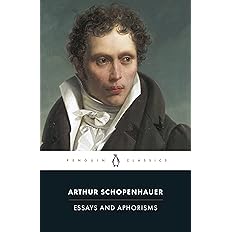
Essays and Aphorisms
Best for readers who prefer short pieces and want a broad introduction to his themes.
The World as Will and Representation
Best for readers ready to work through the main system slowly, with a guide and some re-reading.